What is an Integration-Platform-as-a-Service (iPaaS)
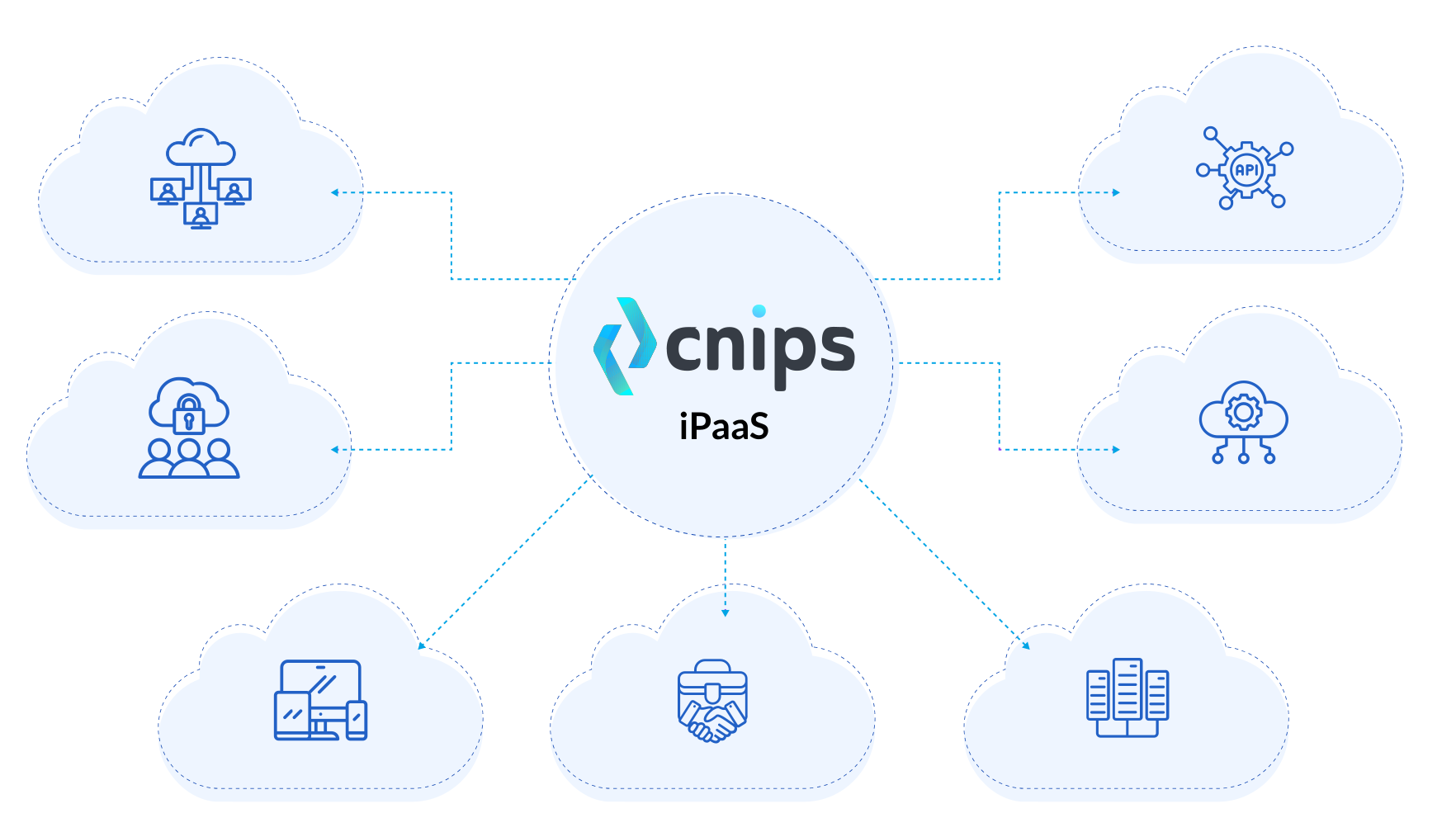
An integration platform as a service (iPaaS) such as cnips is a cloud-based solution designed to facilitate the integration of different software applications, data sources, and services. It acts as a central hub that enables companies to seamlessly connect systems with each other. iPaaS takes on the task of complex middleware and integrates systems, extracts data, and loads information from third-party systems without the effort of individual software development or additional hosting. This allows systems to communicate with each other easily.
The primary purpose of iPaaS is to simplify the creation, deployment, and management of integrations. By providing a wide range of automated tools and pre-built connectors (pre-built apps in cnips), iPaaS enables the fast and efficient connection of a variety of applications and data sources.
These features are essential for modern businesses that rely on a variety of software solutions to manage their business processes, as they bring together data from different systems and make information visible across systems.
How does iPaaS work?
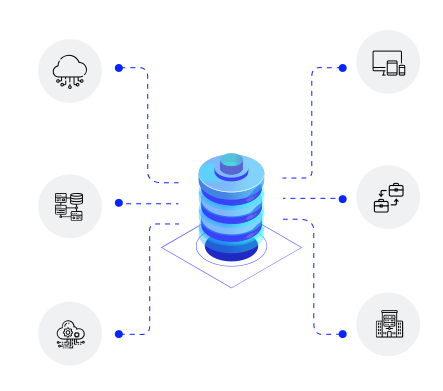
iPaaS operates as a flexible and scalable cloud-based platform that orchestrates the flow of data and processes across different applications and services. At its core, iPaaS provides connectors and integration tools to link various systems, enabling them to communicate and share data in real time. iPaaS thus forms the technical basis for enterprise integration across domains and departments.
The process typically begins with the configuration of apps and connectors that facilitate communication between different applications. These connectors are pre-built connections that understand the protocols and data formats of the systems they connect and ensure smooth data exchange.
Once the technical connection between the applications has been established, the function of an iPaaS solution goes far beyond simple data exchange. It enables different data formats to be adapted to the requirements of the target systems and complex services and transformations to be mapped directly in the platform. This automates data throughout and makes it usable across different applications without manual intervention or process breaks.
In addition, iPaaS supports the automation of business processes by enabling the definition of workflows that span multiple applications. These workflows can trigger actions in one system based on events in another system, such as automatically updating inventory when a new order is placed. This not only improves operational efficiency but also increases the flexibility of the business.
Advantages of an iPaaS tool
The use of an Integration-Platform-as-a-Service (iPaaS) offers a range of significant advantages for businesses:
Simplified integration
iPaaS simplifies the often complex process of integrating different applications and systems, enables faster implementation. Thus, it reduces the need for in-depth (technical) knowledge of the connected applications and programming skills.

Centralized management
iPaaS platforms provide a single and comprehensive overview of all integrations across your organization. This centralized management simplifies monitoring, troubleshooting, and updating integrations, ensuring that you have full visibility and control over the entire integration landscape. It reduces the complexity of managing multiple point-to-point connections, making it easier to maintain and optimize integrations as your business grows.

Scalability
As business needs evolve, iPaaS can easily scale to accommodate additional applications and higher data volumes. The integration solution ensures that integrations remain robust and efficient.

Cost efficiency
By reducing the reliance on custom development and minimizing maintenance overhead, iPaaS offers a cost-effective solution for managing integrations, with flexible pricing models that align with business usage.
Enhanced data consistency
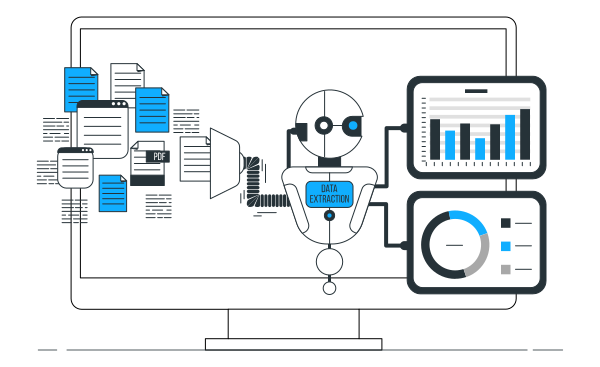
iPaaS ensures that data is consistently and accurately synchronized across all integrated systems, improving the reliability and quality of business operations.

Increased agility
With iPaaS, businesses can quickly adapt to changing market demands by modifying existing integrations or deploying new ones, thereby maintaining a competitive advantage.
Why cnips is the best
iPaaS for your company
When it comes to choosing an iPaaS, cnips stands out for several reasons:

Extensive connectivity
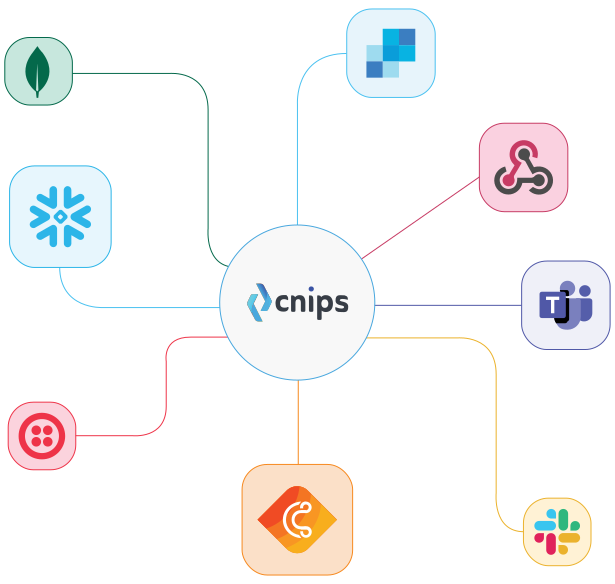
cnips offers a broad range of pre-built apps, allowing businesses to seamlessly integrate a wide variety of applications, from cloud-based services to on-premise systems and legacy software.

Powerful automation
By reducing the reliance on custom development and minimizing maintenance overhead, iPaaS offers a cost-effective solution for managing integrations, with flexible pricing models that align with business usage.

Security and compliance
Data security is a top priority for cnips. The platform is equipped with robust encryption and security features that safeguard sensitive information and ensure compliance with industry regulations.

Tailored solutions
cnips recognizes that each business has unique needs. The platform offers customizable integration options, allowing organizations to tailor workflows and also the pre-built apps to meet their specific requirements.

Dedicated support
With cnips, you gain access to a team of experts who are committed to ensuring your integrations are successful. From initial setup to ongoing optimization, cnips provides the support you need to achieve your business goals.
Data souvereignty
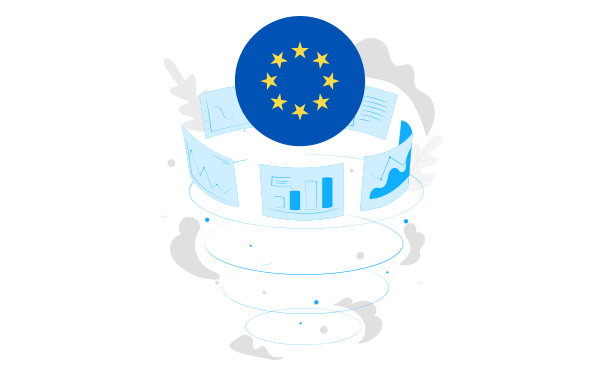
Our solution is operated exclusively in Germany and within the European Union. This means that your data remains protected by European data protection law at all times and never leaves this legal area. You benefit from maximum data security while also meeting all relevant compliance and data protection requirements—without the risk of unauthorized access.
By choosing cnips, businesses can leverage a leading iPaaS solution that delivers unmatched flexibility, reliability, and performance, making it the ideal choice for organizations looking to optimize their integration strategy.
What are some possible use cases for iPaaS?
Typical use cases range from data integration between ERP, CRM, and HR systems to the automation of entire business processes in real time. Companies use it to connect SaaS software applications and on-premise systems via APIs and connections, orchestrate workflows, and ensure consistent monitoring of processes.
Common scenarios include e-commerce order processing, lead synchronization between marketing and sales, invoice and payment reconciliation, master data harmonization, and event-driven integration of new applications into an existing architecture. All of these data flows run in the cloud via a central platform.

Which industries benefit the most from iPaaS?
Companies of all sizes benefit from systems that “talk to each other” and constantly exchange data. Industries with many heterogeneous systems and high process cycles benefit from an integration platform. These include companies in manufacturing (bill of materials/ERP flows), e-commerce and retail (inventory, orders, fulfillment), financial services (rule- and interface-driven processes), healthcare (sensitive data integration), logistics (tracking), and professional services (project-related workflows).
In these areas, iPaaS solutions create measurable benefits: less friction between technologies, faster development of new integrations, robust scalability, and better transparency in administration.
How do you choose the right iPaaS solution for your business?
Start with your integration requirements: Which services or software need to be connected, which connections already exist, and which processes should run? Then check the necessary functions (low-code, error handling, versioning), available connectors, and scalability and management requirements (permissions, auditing, multi-tenancy) .
Other important criteria when selecting a provider include implementation (time-to-value), security and compliance architecture, operating model (pure cloud, hybrid, on-premise agent if applicable), provider support, and cost structure. However, the integration strategy in the context of your own infrastructure remains crucial.
Get started with cnips today—
your iPaaS solution
Want to see how iPaaS can revolutionize your business processes?
Request a free demo today and discover the potential of cnips.
FAQs: iPaaS in a nutshell
SaaS vs. iPaaS
SaaS delivers a ready-made software solution (e.g., CRM or HR) via the cloud. iPaaS is the integration platform that connects these software applications and systems, synchronizes data, and automates workflows. Technically speaking, it is therefore a modern middleware or platform for integration.
iPaaS vs. ESB
An ESB (Enterprise Service Bus) is typically anchored in on-premise architectures and strongly transaction- and service-oriented. An iPaaS is a cloud-based integration platform optimized for SaaS, APIs, and eventing, enabling rapid implementation via connectors. ESBs are often suitable for established, complex legacy landscapes and long release cycles. iPaaS, on the other hand, scores highly in agile projects, hybrid scenarios, and modern automation. This integration solution therefore also meets typical enterprise requirements for security and scalability. In many companies, both approaches coexist. While iPaaS takes over new workflows and services, ESBs remain in place for critical core systems.
iPaaS vs. PaaS
PaaS (Platform as a Service) provides a development and runtime environment for creating applications, such as runtimes, databases, DevOps, and infrastructure abstraction. iPaaS, on the other hand, focuses on integration, which includes the integration of systems, the modeling of data flows, and process control. In practice, the two complement each other: Teams develop specialist software on PaaS, which is networked with business systems such as CRM via iPaaS and contributes to the overall integration strategy.